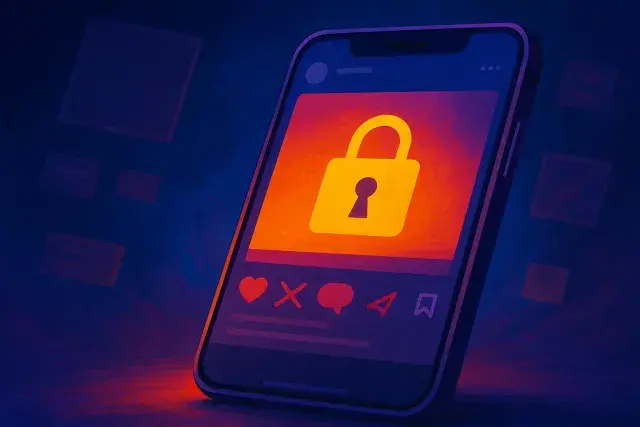
A post that suddenly cannot be liked, shared, or commented on isn't broken - it's locked, and the difference matters enormously to anyone building an audience on the platform. Creators who wake up to find engagement options stripped from a piece of content often assume a bug or a shadowban. In reality, they've encountered one of Instagram's lesser-discussed moderation tools, one that sits somewhere between a warning and a takedown. Understanding how it works, and why it happens, has become essential knowledge for anyone whose income or reach depends on consistent visibility.
This guide breaks down what locking actually does, why Instagram deploys it, and how creators can respond without panicking or, worse, escalating the situation. We'll also look at recent shifts in how aggressively the feature gets applied, because the rules governing instagram locked posts have not stayed static. For creators who rely on rapid follower growth to offset the damage a lock can cause to visibility, some turn to third-party platforms - services like sites to boost instagram followers - though that approach carries its own risks and doesn't address the root cause of a lock. The goal here is clarity: what the feature is, what triggers it, and what a smart creator does next.
Instagram Locked Posts Explained: The Basics
Before reacting to a lock, it helps to understand precisely what Instagram is doing behind the scenes. The feature isn't a single action - it's a graduated response system with different levels of severity, each carrying distinct consequences for reach and interaction.
What Does "Locked" Actually Mean on Instagram?
When Instagram locks a post, it restricts specific interactions - often likes, comments, or shares - while leaving the post visible on the profile. This is different from deletion or a full account suspension. The post remains as evidence, viewable by the owner and sometimes by others, but stripped of the mechanisms that would normally let it spread or accumulate social proof. For creators asking instagram locked posts what is at its core, the simplest answer is this: it's a partial mute button applied by the platform, not by the user.
How Locking Differs From Shadowbanning or Removal
Shadowbanning reduces a post's algorithmic distribution quietly, without any visible marker on the content itself. Removal deletes the post outright, usually citing a specific policy violation. Locking sits in between - visible, explainable, and often reversible. Instagram typically provides at least a partial explanation when a post is locked, whereas shadowbans are rarely acknowledged at all.
Where This Feature Fits Into Instagram's Broader Moderation System
Instagram's trust and safety architecture relies on a spectrum of interventions: warnings, locks, reduced distribution, and outright bans. Locking functions as a middle-tier response - serious enough to hurt engagement, but not severe enough to end an account's presence entirely. It gives the platform room to flag questionable content without committing to a permanent judgment.
- Full visibility remains, but engagement tools are disabled
- Often paired with an in-app notification citing a possible violation
- Distinct from algorithmic suppression, which offers no notification at all
Instagram Locked Posts: What Triggers Them
Locks rarely appear at random. They're typically the result of automated detection systems flagging patterns that resemble policy violations, even when no violation actually occurred.
Content Flags: Copyright, Community Guidelines, and Sensitive Material
The most common trigger involves automated content scanning - systems that detect potential copyright matches in audio or video, or flag imagery resembling restricted categories such as violence, nudity, or regulated goods. These systems are calibrated for scale, not nuance, and false positives happen regularly.
Suspicious Engagement Patterns
A post that receives an unnatural spike in likes or comments within a short window can trigger automated fraud detection, even if the activity is entirely organic. Instagram's systems are trained to spot patterns associated with bot networks or coordinated inauthentic behavior, and a sudden viral moment can sometimes resemble exactly that.
Account-Level Risk Factors
An account with a history of reported content, recent password changes, or logins from unusual locations carries more risk in Instagram's internal scoring. Posts from such accounts face stricter automated scrutiny, meaning the same piece of content might be locked on one account and left untouched on another.
Third-Party Tools and Automation
Creators using scheduling apps, engagement pods, or automated commenting tools sometimes trip detection systems designed to catch spam behavior. Instagram's algorithms don't always distinguish between a legitimate marketing tool and a bot farm, which means well-intentioned automation can backfire.
Instagram Locked Posts Guide: Step-by-Step for Creators
Once a lock appears, the response matters. Creators who understand the appeal process and avoid common missteps tend to recover far faster than those who react impulsively.
How to Check If Your Post Is Locked
Locked posts usually display a banner or notification directly on the content, often accessible through the three-dot menu or the notifications tab. Instagram typically states the reason, whether it's a copyright claim, a community guideline concern, or suspected inauthentic engagement.
Filing an Appeal: What Works and What Doesn't
Appeals should be specific and factual. Vague protests rarely succeed; clear explanations - proof of original content ownership, context for the post's subject matter, or evidence of organic audience growth - carry more weight. Instagram's review teams process high volumes of appeals, so submissions that get straight to the point tend to move faster through the queue.
Avoiding Repeat Locks
Patterns matter more than isolated incidents. A creator who repeatedly posts content bordering on flagged categories, or who continues using risky automation tools after a first lock, faces escalating scrutiny. Cleaning up account practices after the first incident reduces the odds of a second one.
- Document original content sources before publishing, especially music or licensed footage
- Pause third-party automation tools immediately after receiving a lock notice
- Submit appeals with specific, verifiable context rather than general complaints
Instagram Locked Posts Latest: Recent Changes and Trends
Instagram's enforcement patterns shift alongside broader platform priorities, and the last couple of years have brought noticeable changes in how locking gets applied.
Increased Automation in Content Review
Instagram has leaned further into automated detection for copyright and community guideline enforcement, reducing reliance on human moderators for initial flags. This means locks now happen faster, sometimes within minutes of publishing, but it also means false positives occur more frequently.
Greater Transparency in Notifications
Compared to earlier enforcement approaches, Instagram now tends to provide more specific reasoning when a post gets locked, rather than a generic "violates guidelines" message. Creators report seeing more detailed categorization - copyright claim, spam suspicion, sensitive content - which makes appeals easier to construct.
Shifts in How Locks Affect Algorithmic Reach
There's growing evidence that a locked post, even after being unlocked following a successful appeal, doesn't always regain its original distribution momentum. The delay itself costs reach, since Instagram's algorithm heavily favors early engagement velocity. A post locked in its first hour may never recover the visibility it would have earned without interruption.
Impact on Creator Strategy and Growth
Beyond the immediate inconvenience, locks carry strategic consequences that ripple through a creator's broader content plan.
Revenue and Brand Deal Risks
Sponsored content that gets locked mid-campaign creates real problems - brands expect guaranteed engagement windows, and a lock during that window can breach contractual deliverables. Creators working with sponsors increasingly build buffer time into campaign schedules specifically to account for this risk.
Audience Trust and Perception
Followers who notice a post can't be liked or commented on sometimes assume the creator did something wrong, even when the lock resulted from a false positive. Managing this perception often requires direct communication - a quick story update explaining the situation prevents speculation from filling the gap.
Long-Term Account Health Considerations
Repeated locks, even minor ones, can contribute to an account being flagged as higher-risk in Instagram's internal systems, which may affect future content distribution broadly, not just the specific locked posts. This is why understanding the underlying triggers matters more than treating each lock as an isolated nuisance.
Frequently Asked Questions
Can a locked post still be seen by my followers?
Yes, in most cases the post remains fully visible on your profile and in feeds. What's restricted is the ability to interact with it - likes, comments, or shares may be disabled depending on the severity of the flag.
How long does a typical lock last?
Duration varies widely depending on the trigger. Automated content flags sometimes resolve within hours if the appeal succeeds quickly, while more serious community guideline concerns can remain locked for days pending manual review.
Will a locked post hurt my account's overall reach?
A single isolated lock, especially one resolved quickly through appeal, typically has minimal lasting effect on your account. Repeated locks, however, can contribute to a pattern that lowers your account's standing in Instagram's distribution algorithms.
Is there a way to prevent locks before they happen?
You can't eliminate the risk entirely, since automated detection systems sometimes misfire on legitimate content. You can reduce risk by using original audio and footage, avoiding aggressive automation tools, and steering clear of content that closely resembles restricted categories even if it doesn't actually violate them.
Does buying followers or engagement increase the risk of a lock?
Yes, unnatural spikes in followers or engagement are exactly the kind of pattern Instagram's fraud detection systems are built to catch, and this can trigger locks or stricter account-level scrutiny. Organic growth strategies remain far safer for long-term account health.
Should I contact Instagram support directly, or only use the in-app appeal?
The in-app appeal is the correct first step and the one Instagram's systems are built to process efficiently. Direct support contact is generally reserved for cases where the in-app appeal has been denied and you have clear, documented evidence the lock was applied in error.