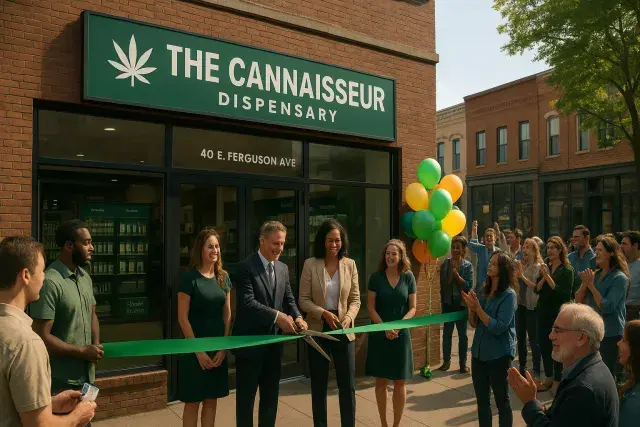
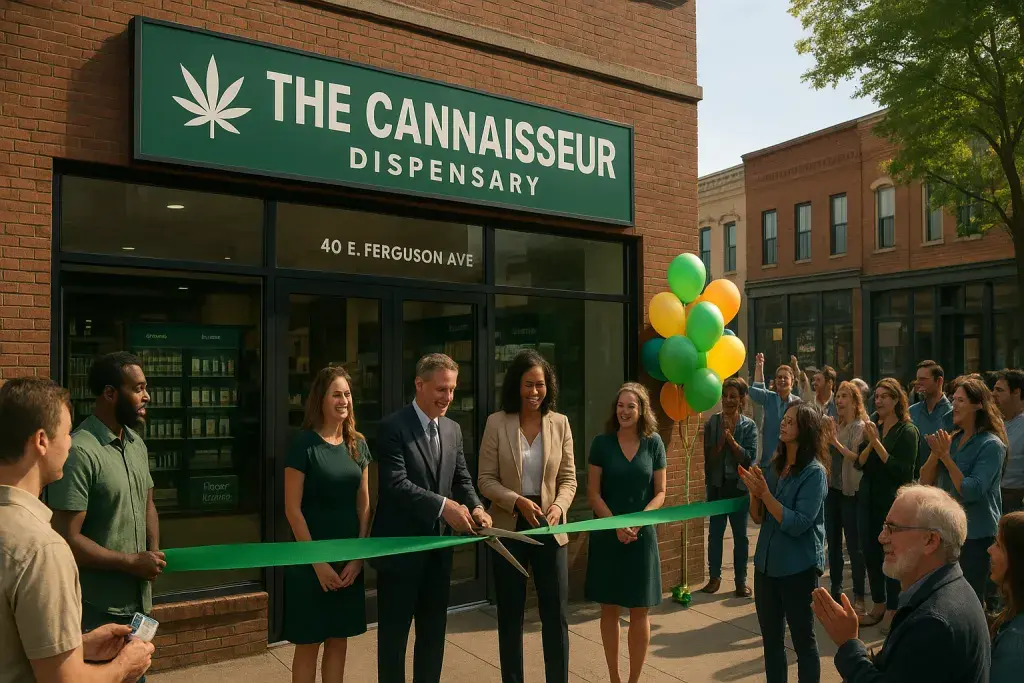
The Cannaisseur Dispensary will open its doors on Friday, August 7, 2026, at 40 E. Ferguson Ave. in downtown Wood River, Illinois, with a ribbon-cutting ceremony at 3:30 p.m. followed by a community celebration. The opening caps a licensing and buildout process that, by the operator's own account, took considerably longer than the community expected - a timeline that says less about this particular team and more about how Illinois adult-use retail actually works.
That delay is worth unpacking, because it's not unusual. Illinois requires dispensaries to clear local zoning approval, state licensing review, security plan sign-off, and Metrc seed-to-sale integration before a single product can move across a counter. Retailers in other states face similar sequencing, and the back-end systems that support it - point-of-sale platforms tied directly to state traceability databases - have become their own compliance checkpoint. Vendors offering a Metrc-compliant POS for Montana illustrate the broader pattern: state-specific integrations are now table stakes for any operator trying to open on schedule, regardless of which state issued the license.
Why Dispensary Timelines Run Long
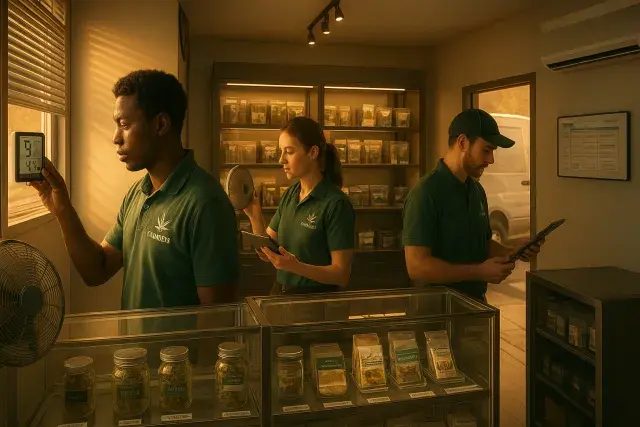
Opening a licensed cannabis retail location involves more than signing a lease. Operators must build out compliant storage, install surveillance systems that satisfy state security mandates, and configure inventory software so every SKU - flower, edibles, tinctures, topicals - reports correctly to the state's tracking system before the doors open. Skip a step, and the state can hold up final licensure indefinitely. The Cannaisseur's own statement that the process was "complex and highly regulated" reflects an operational reality every adult-use retailer in Illinois has to work through, not a unique hurdle.
Municipal review adds another layer. Wood River, like many Illinois municipalities, has local approval authority alongside the state's licensing framework, meaning a dispensary can hold a valid state license and still be unable to open until it clears local requirements. That dual-track system is common across adult-use states and is one reason grand openings often trail initial license announcements by a year or more.
What the Retail Model Signals for Operators
The dispensary's stated approach - a curated menu spanning multiple categories and price points, paired with scheduled one-on-one consultations - reflects a retail strategy increasingly common among independent operators competing against larger multi-state chains. Rather than compete purely on SKU volume or price, smaller dispensaries are leaning into service differentiation: staff training, product education, and slower, more deliberate customer interactions.
That model carries operational costs. Consultation scheduling requires staffing flexibility; a curated menu requires tighter wholesale purchasing decisions and more selective vendor relationships than a high-volume approach. For landlords, suppliers, and brands watching this location, the bigger signal is what it says about neighborhood retail demand in smaller Illinois markets outside Chicago's metro core - areas where community reception, not foot traffic alone, often determines whether a dispensary sustains itself past its first year.
Compliance Reminders for Consumers
- Entry is restricted to individuals 21 and older, consistent with Illinois adult-use law.
- A valid government-issued photo ID is required for entry, not just purchase.
- Products sold at licensed Illinois dispensaries must pass state-mandated lab testing before reaching shelves.
- Cannabis products carry no guaranteed effect, and responsible retailers are expected to communicate that clearly to first-time customers.