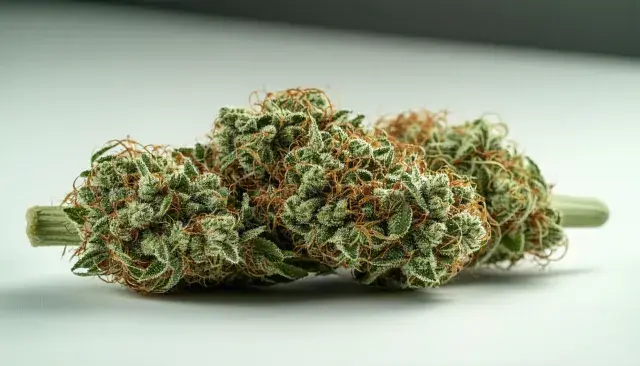
Georgia's medical cannabis framework is drawing sustained criticism from dispensary operators, patient advocates, and physicians who say the program's structural limits - narrow qualifying conditions, a ban on inhalable products, and a license cap that leaves most of the state underserved - are driving registered patients out of the regulated supply chain entirely. That argument came front and center Thursday when speakers appeared before state lawmakers at Mercer University, urging Georgia's Blue Ribbon Study Committee on Medical Marijuana and Hemp Policies to recommend meaningful reform in 2026.
A Program Built for a Narrower Era
The Hope Act, enacted in 2019, shaped what Georgia's Low-THC Medical Cannabis Program looks like today: patients must carry a qualifying terminal condition, purchase only from state-licensed dispensaries, and use non-smokable form factors - edibles, topicals, and similar products. At the time, that framework reflected the political constraints of a conservative state legislature cautiously entering regulated cannabis. Six years later, the program has roughly 30,000 registered patients, according to the Georgia Department of Public Health, and operators say that number reflects the ceiling the law imposed, not actual unmet demand in the state.
Three licensed dispensaries currently serve that patient base. That's the entire licensed retail footprint for a state of more than 10 million people. For comparison, most mature medical markets have dozens of licensed dispensaries across major metro and rural areas alike - creating something closer to realistic geographic access. Georgia's license structure, by design or by consequence, concentrates supply and limits competitive pressure on pricing and product variety.
The Form Factor Problem Has Real Retail Consequences
Here's the catch with restricting patients to non-inhalable products: it's not just a medical access argument - it's a sales-floor and inventory argument too. Inhalable products typically represent a substantial share of dispensary revenue in states with broader form factor permissions. Flower, vape cartridges, and pre-rolls carry higher turn rates and lower unit prices, which drives transaction volume. Edibles and topicals serve critical patient populations, but they can't carry a dispensary's full commercial weight on their own.
For Fine Fettle's Macon location, the only licensed dispensary operating in central Georgia, the restriction means building a retail business around a narrower SKU set than comparable operators in neighboring states carry. Judson Hill, Fine Fettle's Georgia Market President, put it plainly at Thursday's hearing: patients are moving to other states or to unlicensed sources rather than using tested, compliant products grown and processed domestically. That's the compliance failure hiding inside a regulatory framework that looks conservative on paper - it doesn't eliminate consumption, it just redirects it away from licensed, lab-tested supply.
What Expansion Would Actually Mean for Operators
If Georgia's legislature moves toward program expansion in 2026 - broader qualifying conditions, additional form factors, potentially more licenses - the operational implications for current and prospective licensees are significant. Expanding the qualifying condition list would increase patient registrations, which translates directly to larger dispensary patient databases, more consistent foot traffic, and better inventory forecasting. A larger, more predictable patient pool also strengthens the business case for investing in robust point-of-sale systems, seed-to-sale compliance infrastructure, and trained staff.
Adding inhalable products to the permitted product list would require dispensaries to expand their compliance programs - proper storage, age verification protocols, packaging that meets state labeling requirements, and updated COA documentation for each product batch. None of that is especially burdensome for experienced operators, but it requires capital and operational planning. For a market with only three licensees, the upside is considerable; for prospective entrants watching the committee's recommendations, the calculus on whether to pursue a Georgia license likely depends on how far the 2026 legislation actually goes.
The failed 2025 house and senate bills - both of which stalled before reaching the governor's desk - are a reminder that political momentum and legislative outcomes don't track each other neatly in state cannabis policy. Committee Chairman Rep. Mark Newton, a physician, has signaled support for expanded access while flagging youth protection as a non-negotiable condition. That framing - clinical legitimacy, patient need, age gating - is the kind of language that tends to move conservative legislatures, and it suggests the committee's eventual recommendations may be substantive rather than symbolic.
The Broader Regulatory Pattern Georgia Fits
Georgia is not alone in this position. Several states launched medical programs under tight restrictions, watched patient enrollment plateau, and eventually moved toward expanded conditions or additional license classes - sometimes by legislative reform, sometimes through ballot initiative. What distinguishes Georgia's situation is the scale of unmet demand relative to the licensed infrastructure. Thirty thousand registered patients served by three dispensaries is not a functioning market in any conventional retail sense. It's a pilot program that has held that shape for six years.
For compliance professionals and multi-state operators evaluating Georgia, the current committee process is worth monitoring closely. The combination of a physician-led committee, documented patient demand, and two failed but serious legislative attempts in 2025 creates the kind of policy environment where incremental reform becomes increasingly probable - even if another session or two passes before it arrives. The question is less whether Georgia's program will expand and more what shape that expansion takes, and whether the license structure opens up alongside it.