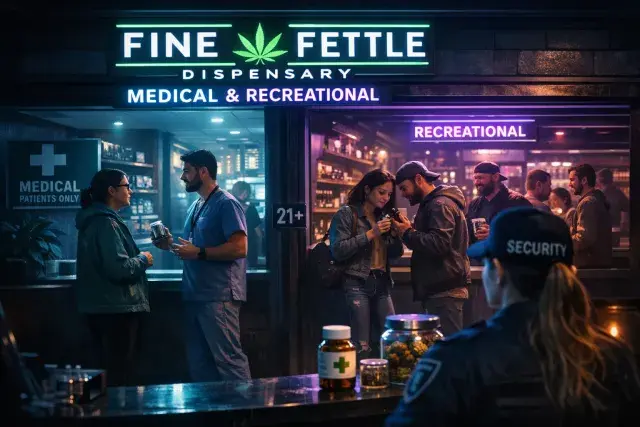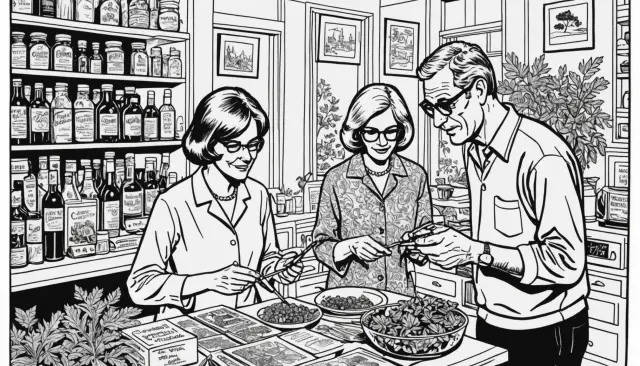
Michigan's cannabis industry has spent years drowning in its own supply. Prices have collapsed, wholesale margins have thinned to almost nothing, and a new 24 percent wholesale tax took effect Jan. 1 on top of everything else. But a demographic shift buried in national survey data suggests the state's marijuana glut might have less to do with too many customers already tapped out and more to do with an entire customer segment retailers have barely bothered to court: Baby Boomers.
The numbers are not small. Nearly 22 percent of Americans ages 55 to 65 reported using cannabis during the previous year, according to the Monitoring the Future survey from the University of Michigan, the highest share the survey has ever recorded. Applying national spending patterns attributed to Headset - where Baby Boomers account for roughly 12.6 percent of tracked cannabis purchases - to Michigan's approximately $3.17 billion in 2025 sales produces a rough estimate of $399 million in annual Boomer spending in that state alone. Add Ohio's recreational market, which cleared $836 million in its first full year of adult-use sales, and the combined estimate approaches half a billion dollars. None of that is an official figure; Michigan's Cannabis Regulatory Agency doesn't break out sales by generation, and operators tracking compliance through systems modeled on the metrc cannabis traceability system maine uses know better than most how limited demographic reporting really is at the point of sale.
Why Older Buyers Don't Behave Like Younger Ones
Here's the catch: selling to Boomers isn't the same business as selling to the 25-to-40 crowd that currently drives most dispensary revenue. The University of Michigan's National Poll on Healthy Aging found that among cannabis users 50 and older, 81 percent said they use it to relax, 68 percent for sleep, and 63 percent for pain relief. Only a fraction are chasing high-THC flower or novelty vape formats. That points toward lower-dose edibles, tinctures, topicals, and balanced THC-CBD products - categories that don't always get premium shelf space in stores built around potency marketing.
Retailers who treat this as a simple upsell opportunity will likely misread the moment. A consumer returning to cannabis after three or four decades away is walking into a budroom that looks nothing like what they remember. Concentrates, live resin, nano-emulsified beverages - none of it existed the last time many of these customers bought marijuana legally, or otherwise. Staff training, not just SKU expansion, becomes the operational lever here.
Compliance and Safety Considerations Cannabis Retailers Can't Skip
This is where the opportunity runs into real risk. Today's cannabis products carry far higher THC concentrations than what circulated decades ago, and 83 percent of Michigan adults 50 and older recognize that, according to the same University of Michigan poll. Older consumers are also more likely to be on prescription medications, raising legitimate concerns about interactions that dispensary staff are not licensed or equipped to advise on. Twenty-one percent of Michigan cannabis users 50 and older reported driving within two hours of consuming cannabis at least once in the past year - a figure that should concern any operator thinking about impairment liability and responsible retailing messaging.
Notably, 64 percent of Michigan's monthly cannabis consumers said they'd discussed their use with a health care provider. That leaves more than a third who hadn't. For an industry already navigating 280E tax burdens, strict COA and lab-testing requirements, and compliant packaging rules, adding an under-informed and medically complex customer base without adjusting education protocols is not a minor operational detail - it's a compliance exposure waiting to surface.
A Market Neither State Has Fully Built
Michigan's advantage is maturity: cheap product, dense dispensary coverage, and a legal market dating to December 2019. Ohio's recreational program, barely two years old, is still finding its footing. Neither state has built marketing, product formulation, or in-store education specifically for older consumers with the seriousness it has aimed at younger demographics. Whichever operators move first - with lower-dose formats, clearer labeling, and genuinely trained budtenders rather than upsell scripts - stand to build loyalty in a segment competitors haven't yet noticed is there.