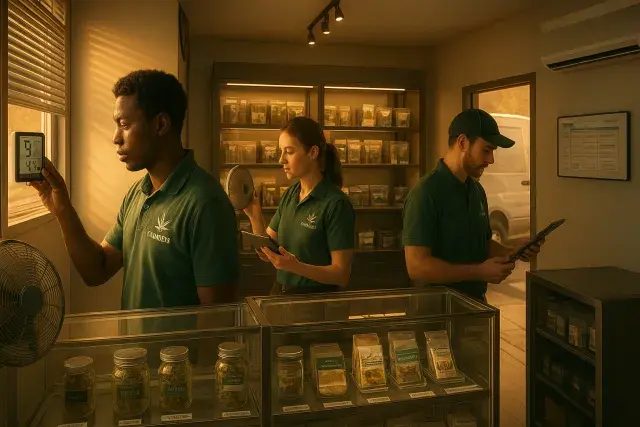
As temperatures climb across legal cannabis markets each summer, dispensary operators face a set of operational pressures that most retail sectors simply don't encounter. Heat isn't just an inconvenience for budtenders and customers - it's a compliance and product integrity issue. Cannabis flower, infused products, and certain concentrate formats are sensitive to sustained heat exposure, and the burden of maintaining controlled environments falls squarely on the licensed retailer.
Store managers who treat temperature management as a facilities afterthought are running a real risk. Product degradation can affect cannabinoid profiles, alter consistency in edibles, and compromise packaging integrity - all of which carry implications for compliance and customer trust. The operational logic here isn't complicated, but executing it across a retail floor, a back-of-house storage area, and a delivery vehicle simultaneously takes coordination. Retailers using a cannabis pos system alaska and similar purpose-built point-of-sale platforms in regulated markets have started integrating inventory flagging features that help managers track batch storage conditions alongside standard seed-to-sale data - a practical response to the reality that product shelf life and ambient temperature are directly connected.
The conversation extends beyond the salesfloor. Social media content from health professionals this summer has circulated widely - including viral tips about cross-ventilation, closing window shades during daylight hours, running high-heat appliances at night, and switching to LED lighting to reduce ambient warmth. For a residential audience, that's useful general guidance. For a dispensary operator running a licensed retail space, the same principles translate into real cost and compliance variables. LED retrofits reduce heat load and lower energy draw; appliance scheduling affects HVAC performance; and proper ventilation - done correctly - doesn't just help staff comfort, it protects product stored in display cases not rated for extreme ambient temperatures.
Product Integrity Under Heat Stress Is a Compliance Matter, Not Just a Comfort Issue
Most state cannabis regulations require that licensed retailers store products within specified environmental conditions. The specifics vary by jurisdiction, but the underlying obligation is consistent: products sold to consumers must match the certificate of analysis issued at the time of lab testing. When flower sits in a display environment that regularly exceeds acceptable temperature thresholds, terpene degradation accelerates. Edibles can melt, separate, or lose dosage uniformity. Certain vape cartridges are vulnerable to hardware stress from repeated heat expansion.
None of that is abstract. A consumer who purchases an infused product that has been compromised by improper storage has a legitimate grievance - and in markets with active regulatory enforcement, the retailer holds the liability. Compliant packaging helps, but it doesn't substitute for controlled storage. Operators should audit their display case conditions, back-room storage areas, and delivery vehicle protocols before summer demand peaks, not after a complaint lands.
What Operators Can Do Without Waiting for a Capital Budget
Not every fix requires a renovation. Some of the most effective adjustments are low-cost operational changes - the kind that don't require a capital expenditure approval:
- Close exterior-facing blinds or shades during peak sun hours to reduce solar heat gain on display cases and product walls
- Schedule energy-intensive back-of-house equipment - label printers, industrial shredders, compactors - for off-peak hours when ambient heat is lower
- Audit LED conversion status across the retail floor; older fluorescent or incandescent fixtures add measurable heat to enclosed spaces
- Establish cross-ventilation protocols for storage rooms that don't have dedicated HVAC coverage
- Review delivery manifest procedures to ensure time-in-transit for temperature-sensitive products stays within acceptable windows during summer months
These aren't dramatic interventions. They're the kind of operational hygiene that separates a well-run licensed retailer from one that learns the hard way. The thing is, a lot of these adjustments are genuinely inexpensive - and the downside of ignoring them, from a product integrity and regulatory standpoint, is not.
The Broader Signal for Cannabis Retail Operations
Summer operating conditions are a useful stress test for how systematized a dispensary actually is. A store that handles heat-related product management well - through staff training, inventory protocols, and environmental controls - is also likely handling SKU rotation, expiration tracking, and compliance documentation with the same rigor. The two aren't unrelated. Operational discipline tends to be consistent across a business, or it isn't there at all.
Multi-state operators have an advantage here: they can push standardized seasonal protocols across locations and leverage shared vendor relationships for HVAC servicing or LED retrofit contracts. Independent single-license operators face the same regulatory obligations with fewer resources to address them - which is exactly why low-cost, behavior-based changes matter more, not less, at that scale.
Summer arrives on the same schedule every year. The operators who treat it as a planning variable rather than a recurring surprise are the ones whose product quality and compliance records reflect that preparation.