
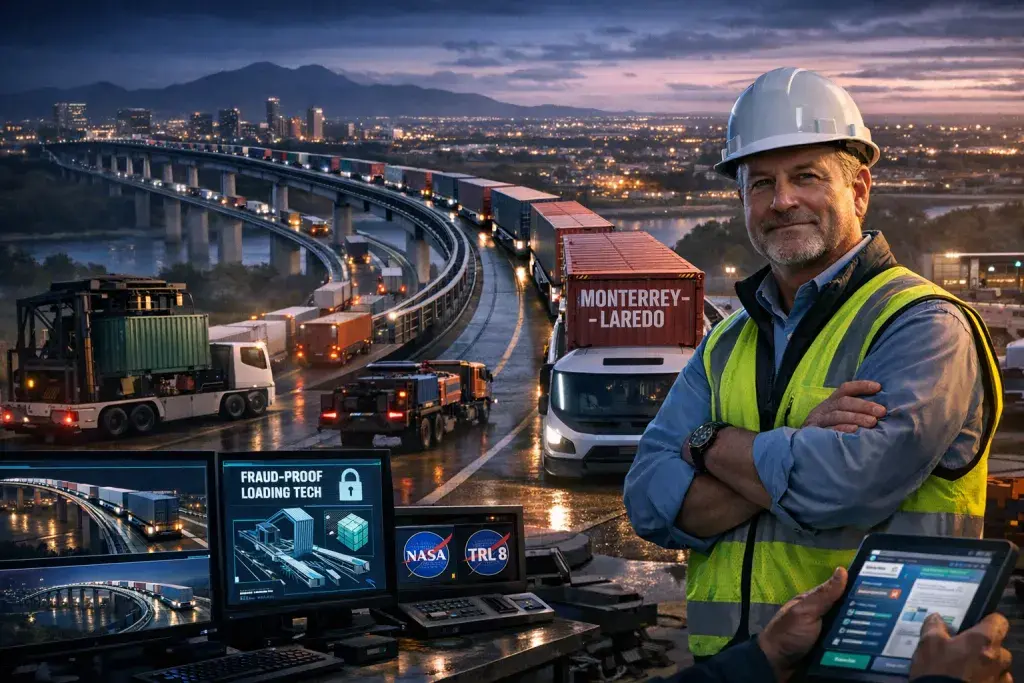
Houston-based Green Corridors is gearing up to build prototypes for its ambitious Project Pegasi, an elevated freight guideway and bridge across the Rio Grande at the U.S.-Mexico border in Laredo, Texas. With presidential approval secured in June, construction starts within six months, promising to transform cross-border trade by easing congestion at the nation's busiest truck crossing and cutting emissions.
Project Details and Technological Readiness
Project Pegasi features automated shuttles, container lifts, and a dedicated guideway designed for seamless freight movement. CEO Mitch Carlson revealed in an exclusive interview that digital twin modeling has refined the system over three years, with shuttles now at NASA’s Technology Readiness Level 4, advancing to Level 7 soon. Prototypes for shuttles, terminals, and lifts will enter manufacturing and testing in 2026 on a 2-mile Texas test track featuring an S-curve, completed by August or September.
- Diesel-hybrid propulsion and steel construction for durability.
- Platoon operations mimicking a conveyor belt for steady, low-speed efficiency.
- 2,500 shuttles planned, enabling a four- to five-hour trip from Monterrey, Mexico, to Laredo.
Manufacturing will occur in Texas or Nuevo León, Mexico, leveraging Carlson’s Snubbertech expertise in heavy equipment.
Addressing Key Border Challenges
Laredo handles the bulk of U.S.-Mexico truck traffic among Texas crossings in Brownsville, Eagle Pass, and El Paso. Current operations close nightly, suffer fraud and theft, and idle trucks exacerbate emissions and delays. Pegasi counters this with 24/7 service, pre-U.S. scanning in Mexico, secure loading to prevent tampering, and segregated driver zones—keeping U.S. drivers north and Mexicans south, sidestepping visa issues.
Green Corridors will fund inspection facilities for Customs and Border Protection at no public cost, scouting greenfield sites in Monterrey and Laredo, plus potential truck stops. Mobile apps for truckers and patents on loading tech further streamline logistics.
Implications for Trade and Sustainability
Estimated at $6-10 billion and financed via debt, equity, and infrastructure funds, Pegasi tackles freight inefficiencies amid volatile material costs. By reducing truck idling and border queues, it promises lower emissions and fraud, bolstering North American supply chains strained by post-pandemic disruptions. This conveyor-like system could set a model for automated freight corridors, enhancing security, predictability for 3PLs, and economic ties between Texas and Mexico, while aligning with global pushes for greener logistics.