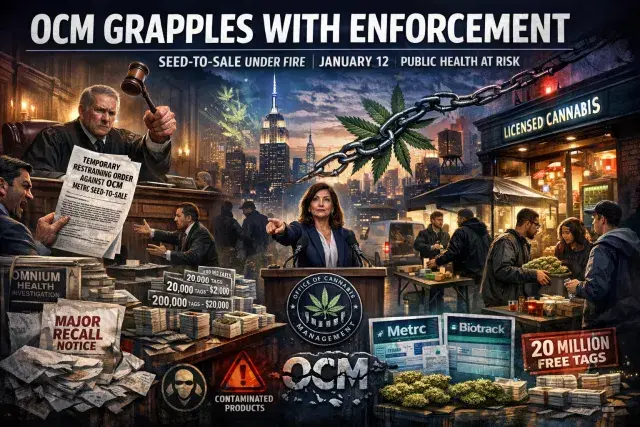
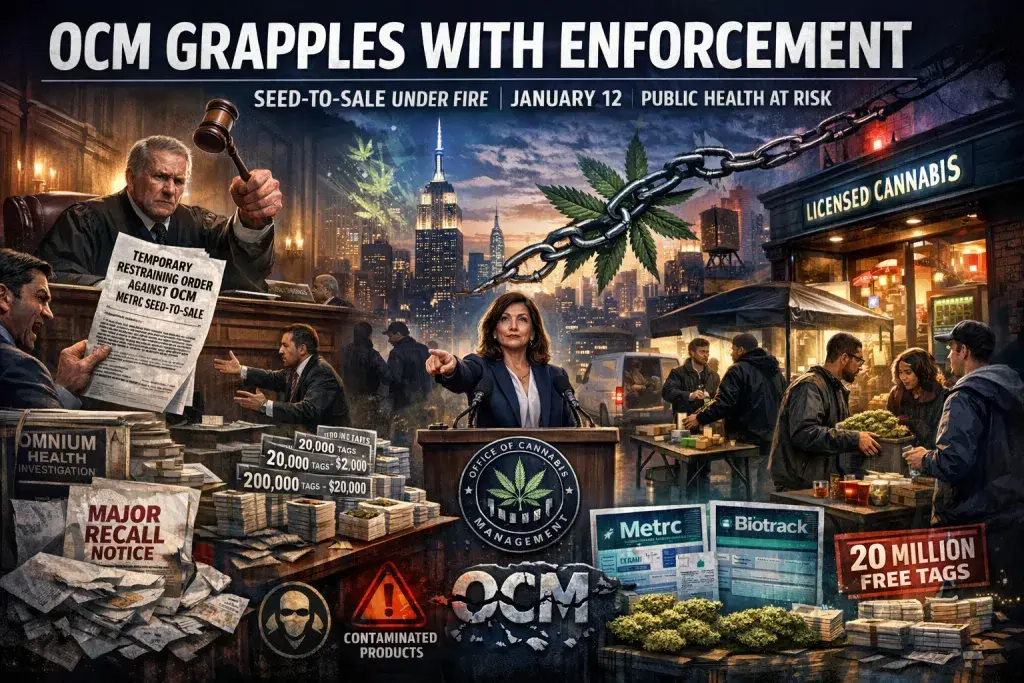
New York's Office of Cannabis Management (OCM) is confronting significant enforcement hurdles, highlighted by a dropped major recall and investigation in December, alongside a lawsuit threatening its seed-to-sale tracking system rollout scheduled for January 12. These issues undermine efforts to regulate the state's nascent adult-use cannabis market, launched in late 2022, and raise concerns about protecting consumers from illicit products.
Recent Enforcement Setbacks
In a blow to its credibility, OCM abandoned its largest recall to date and halted an investigation into an alleged license rental scheme involving Omnium Health. Governor Kathy Hochul intervened on December 8, demanding the resignation of interim Executive Director Felicia Reid and Deputy Counsel James Rogers, who oversaw the Trade Practices Bureau formed to combat illicit activities. The Omnium case accused the processor of renting facilities to unlicensed operators, diverting products to illegal markets—a problem a robust tracking system could prevent.
Seed-to-Sale System Under Fire
Veterans Holdings Inc., operating as Veterans Choice Creations, filed a 19-page lawsuit on December 16 in Albany Supreme Court, seeking a temporary restraining order against OCM's mandatory Metrc seed-to-sale compliance. The complaint argues the requirement for unique ID tags at 10 cents each imposes massive costs—up to $2,000 for indoor crops (10,000 sq ft canopy) and $20,000 for outdoor (100,000 sq ft)—a sharp increase from BioTrack's batch tagging.
- OCM switched to Metrc after BioTrack's August partnership announcement, delaying full implementation from 2023.
- To mitigate costs, OCM pledged 20 million free tags on December 15, distributed evenly to licensed processors.
- Plaintiffs claim OCM overreached authority, violating separation of powers by creating policy without legislative backing.
OCM counters that blocking the system endangers product authenticity and public health, with a response due by January 7.
Implications for Public Health and Market Stability
These developments expose OCM's growing pains in a market plagued by illicit competition, where unlicensed products flood streets and dispensaries. A functional seed-to-sale system is crucial for traceability, curbing diversion that fuels black markets and risks contaminated goods—echoing national trends where poor regulation correlates with higher youth exposure and health incidents. Interim leader Susan Filburn vows stability, but ongoing delays could erode trust, slow licensing, and hinder New York's equity-focused cannabis goals. Without swift resolution, enforcement weaknesses may prolong vulnerabilities in consumer safety and economic potential.