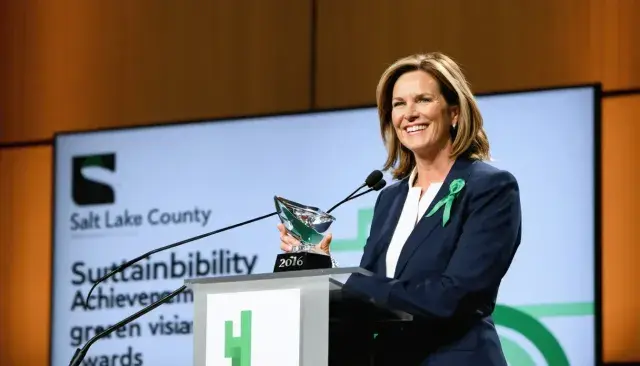
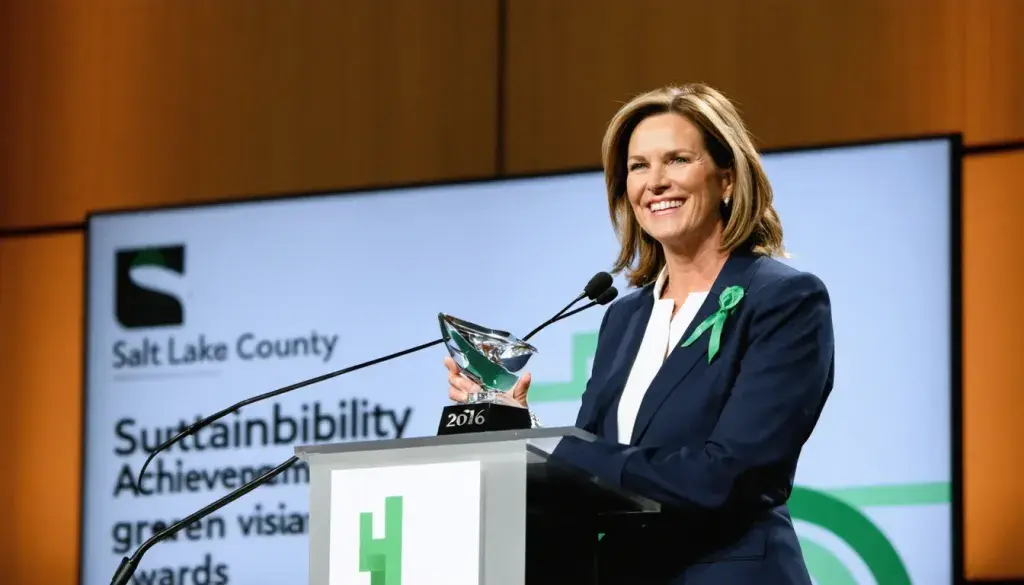
In Salt Lake City on Tuesday, Salt Lake County Mayor Jenny Wilson presented 10 inaugural Sustainability Achievement Awards to county departments and agencies excelling in energy conservation and environmental stewardship. This ceremony not only recognizes past efforts but launches the "Green Vision" initiative, underscoring the county's commitment to taxpayer savings and ecological health amid Utah's arid challenges.
Spotlighting Collaborative Wins
The awards highlight practical, cross-departmental actions addressing water scarcity, air quality, and waste reduction. A standout example is the "Achievement in Land" award to six entities—including the Sheriff's Office, Mountain America Expo Center, and Animal Services—for the "Flip the Strip" program. This initiative replaced 160,930 square feet of turf with water-efficient landscaping, slashing irrigation needs and bolstering drought resilience.
- Achievement in Water: Salt Lake County Arts and Culture for its Great Salt Lake exhibit, raising awareness of the lake's cultural and environmental vital role.
- Achievement in Air: Health Department’s Vehicle Repair and Replacement Assistance Program, aiding low-income residents in adopting cleaner vehicles to cut emissions.
- Achievement in Energy: Daybreak Branch Library, Utah's first net-zero building with geothermal systems and 512 solar panels generating 102% of its energy needs.
- Achievement in Waste and Recycling: Salt Palace Convention Center, diverting 33.57% of 2025 waste through recycling and composting.
Green Vision: Unifying County Efforts
Mayor Wilson stressed that sustainability work predates the awards—it's about formal recognition and unity. The new "Green Vision," set for full launch in 2026, fosters collaboration to conserve water, improve air, and cut costs. In an arid state like Utah, where the Great Salt Lake is shrinking due to overuse and climate pressures, such programs prevent wasteful practices like nighttime sprinklers, modeling responsibility for residents.
Implications for Utah's Environmental Future
These steps align with broader Western U.S. trends toward water-efficient landscapes and net-zero infrastructure, which can reduce municipal water use by 20-50% in similar climates. By prioritizing low-emission vehicles and renewable energy, Salt Lake County tackles inversion-trapped pollutants, potentially lowering health risks like respiratory issues. As taxpayer-funded operations lead by example, Green Vision could inspire regional policies, ensuring long-term viability for Utah's ecosystems and economy.