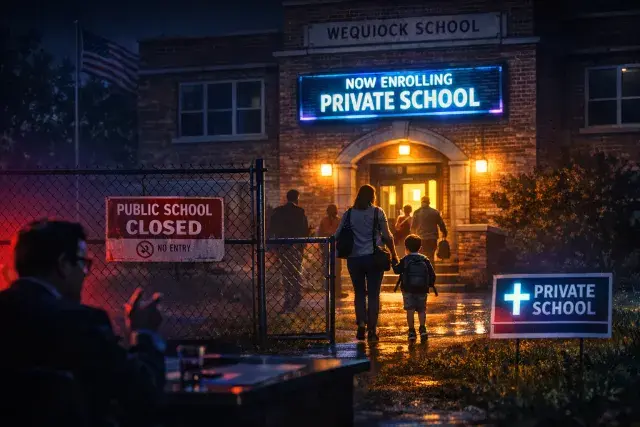
The Green Bay School Board voted narrowly to allow private school students to occupy the former Wequiock Elementary building, securing its educational role for the foreseeable future. This decision overrides a key restriction from the property's recent sale, raising questions about public resources and local education priorities in the Town of Scott. The outcome reflects tensions between district needs and private interests in repurposing shuttered schools.
Property Sale Sparks Initial Restrictions
In June 2025, David Charles, president and owner of Cash Depot Ltd., purchased the Wequiock Elementary building at 3994 Wequiock Road for $500,000. The sale agreement explicitly prohibited its use as a school, aiming to prevent competition or confusion with public education facilities. Such clauses often protect districts from losing enrollment or future assets, especially when buildings close due to declining student numbers or budget constraints.
Board's Close Vote Reshapes Agreement
The board's approval came after a tight vote, demonstrating divided opinions on amending the sale terms. Private schools frequently seek underused public buildings to expand without high construction costs, a trend seen across shrinking rural districts. This move ensures the structure remains active for education rather than converting to commercial or vacant use, preserving community investment in the facility.
Implications for Local Education Landscape
Allowing private occupancy could stabilize the building's maintenance while challenging traditional boundaries between public and private sectors. School boards nationwide face similar dilemmas as enrollment drops and properties sit idle, prompting leases or sales with evolving conditions. In Green Bay, this decision highlights policy flexibility, potentially influencing future deals and debates over taxpayer-funded assets serving non-public students.